Views: 14
When most Indian business owners think about building their brand, the first thing they do is get a logo designed. They spend time choosing colors, selecting fonts, and perfecting the symbol that will represent their business. And while that is an important step, many of them stop right there, believing that having a logo means having a brand identity. This is one of the most common and costly misconceptions in the world of Indian business branding.
Logo and brand identity are not the same thing. A logo is a part of brand identity, but brand identity is much larger, much deeper, and much more powerful than a logo alone. Understanding the difference between logo vs brand identity is not just an academic exercise. It is a practical business decision that affects how customers perceive you, how much trust you build, how much your brand is worth, and how effectively you can protect your business assets legally.
This complete guide explains the difference between logo and brand identity in plain language, helps Indian businesses understand what brand identity truly includes, and covers the legal steps every business must take to protect both their logo and their broader brand identity in 2026.
Table of Contents
- 1 What Is a Logo? Understanding the Basics
- 2 What Is Brand Identity? The Complete Picture
- 3 Logo vs Brand Identity: The Key Differences Explained
- 4 Why Indian Businesses Confuse Logo with Brand Identity
- 5 Why Building a Complete Brand Identity Matters for Your Business
- 6 How to Build a Brand Identity Beyond Your Logo
- 7 The Legal and Financial Dimensions of Logo vs Brand Identity
- 8 Practical Tips for Indian Businesses Building Their Brand Identity
- 9 FAQs
- 10 Conclusion: Your Logo Is the Start, Not the Finish
What Is a Logo? Understanding the Basics
A logo is a visual mark that identifies your business. It is a graphic element, whether text-based, symbol-based, or a combination of both, that serves as the primary visual identifier of your brand. When someone sees your logo, they should immediately associate it with your business and what it offers.
A logo can take many forms. It can be a wordmark where the business name is styled in a distinctive typographic treatment. It can be a lettermark using initials. It can be a pictorial mark using an icon or symbol. It can be a combination mark pairing text and a symbol. It can be an emblem or a mascot character. Regardless of the form it takes, a logo is fundamentally a recognition device. Its job is to say this is us in the most immediate and visual way possible.
What a Logo Does for Your Business
A well-designed logo creates instant visual recognition across all the touchpoints where your business appears. It signals professionalism and legitimacy to new customers. It provides a consistent visual anchor for all your marketing materials. It serves as the cornerstone around which the rest of your visual brand identity is built.
However, a logo by itself does not tell customers what your business values are, what experience they will have when they interact with you, what your brand voice sounds like, or how your brand makes them feel beyond the initial visual impression. That is the job of brand identity as a whole.
The Legal Status of Your Logo
Your logo is also a legal asset. Once designed, it is an original artistic work protected under Indian copyright law from the moment of creation. More importantly for commercial purposes, it can and should be registered as a trademark under the Trade Marks Act 1999, giving you exclusive rights to use that mark for your specific goods and services in India.
Trademark registration of your logo is one of the most important legal steps any Indian business can take. It prevents competitors from copying or imitating your visual mark and gives you legal recourse if they do. For professional assistance with trademark registration of your logo in India, OnlineTrademark India provides end-to-end services tailored to businesses of all sizes.
What Is Brand Identity? The Complete Picture
Brand identity is the complete system of visual, verbal, and experiential elements that together communicate who your brand is, what it stands for, and how it is different from every other brand in your market. It is the totality of everything a customer sees, hears, reads, and feels when they interact with your business.
Think of brand identity as the personality of your business expressed across every single touchpoint. Your logo is the face of that personality. But a face alone does not make a person. Brand identity is the entire person, their appearance, their voice, their values, their behavior, their reputation, and the feeling they leave with you after every interaction.
The Core Components of Brand Identity
Brand identity is made up of multiple interconnected components that work together as a cohesive system. Understanding each component helps you see why brand identity is so much more than just a logo.
Visual Identity System
The visual identity system is the most tangible part of brand identity and the part most closely associated with the logo. It includes the logo itself in all its approved variations, the color palette with exact specifications for digital and print use, the typography system including primary and secondary typefaces, the iconography and illustration style used across brand communications, the photography and imagery style that defines how visuals are selected and used, and the graphic elements like patterns, textures, shapes, and lines that appear consistently across brand materials.
All of these visual elements together create a look and feel that is distinctively yours. When executed consistently, even without the logo visible, your target customers should be able to recognize your brand from your colors, fonts, and visual style alone.
Brand Voice and Tone
Brand identity also includes the verbal dimension of your brand, how your brand writes and speaks. Your brand voice is the consistent personality expressed through language across all written communications including your website copy, social media posts, advertisements, customer service interactions, product descriptions, and email communications.
A brand with a formal, authoritative voice communicates very differently from one with a conversational, playful voice, even if both have equally strong visual identities. The voice must align with the visual identity to create a coherent overall brand experience.
Brand Values and Positioning
At the heart of any strong brand identity is a clear articulation of what the brand believes in, what it stands for, and what position it occupies in the market relative to competitors. These values inform every design decision, every communication choice, and every business decision.
A brand that stands for sustainability and environmental responsibility should have a visual identity, a voice, and a set of business practices that all consistently reflect those values. When values, visuals, and voice are all aligned, the brand identity is powerful and trustworthy. When they are inconsistent, customers sense the disconnect and trust is eroded.
Brand Experience
Brand experience is the sum of every interaction a customer has with your business. It includes the experience of visiting your website, entering your physical store, opening your product packaging, calling your customer service line, reading your social media content, and receiving your invoices and receipts.
Every one of these touchpoints is an opportunity to either reinforce or undermine your brand identity. A beautifully designed logo and a polished visual identity mean nothing if the actual customer experience contradicts what the visual brand promises.
Logo vs Brand Identity: The Key Differences Explained
Now that you understand what both terms mean, here is a clear breakdown of the key differences between logo and brand identity that every Indian business owner should understand.
Scope and Scale
A logo is a single visual element. Brand identity is a complete system of multiple elements working together. Your logo is one component within your brand identity, not the whole of it.
Function and Purpose
A logo’s primary function is identification and recognition. It answers the question who are you in a single visual mark. Brand identity’s function is communication and connection. It answers the questions what do you stand for, how do you make me feel, and why should I choose you over everyone else.
Depth and Complexity
A logo can be designed in a matter of days or weeks. A comprehensive brand identity system requires deep strategic thinking, extensive research, and careful development across multiple components. It represents a significantly larger investment of time, creative skill, and financial resources.
Longevity and Evolution
A well-designed logo can remain essentially unchanged for decades. Brand identity evolves continuously as the brand grows, enters new markets, launches new products, and responds to cultural changes. The logo may stay the same while the way it is applied and the contexts in which it appears evolve significantly over time.
Legal Protection
A logo can be registered as a trademark to provide specific legal protection for that visual mark. Brand identity as a whole is protected through a combination of trademark registrations for different elements, copyright protection for original creative works, trade dress protection for distinctive overall appearance, and in some cases registered designs.
Understanding how to build a comprehensive legal protection strategy for all elements of your brand identity, not just your logo, is an important step for any serious Indian business. LegalIP.in provides expert guidance on intellectual property strategy for Indian businesses covering trademarks, copyrights, and all dimensions of brand asset protection.
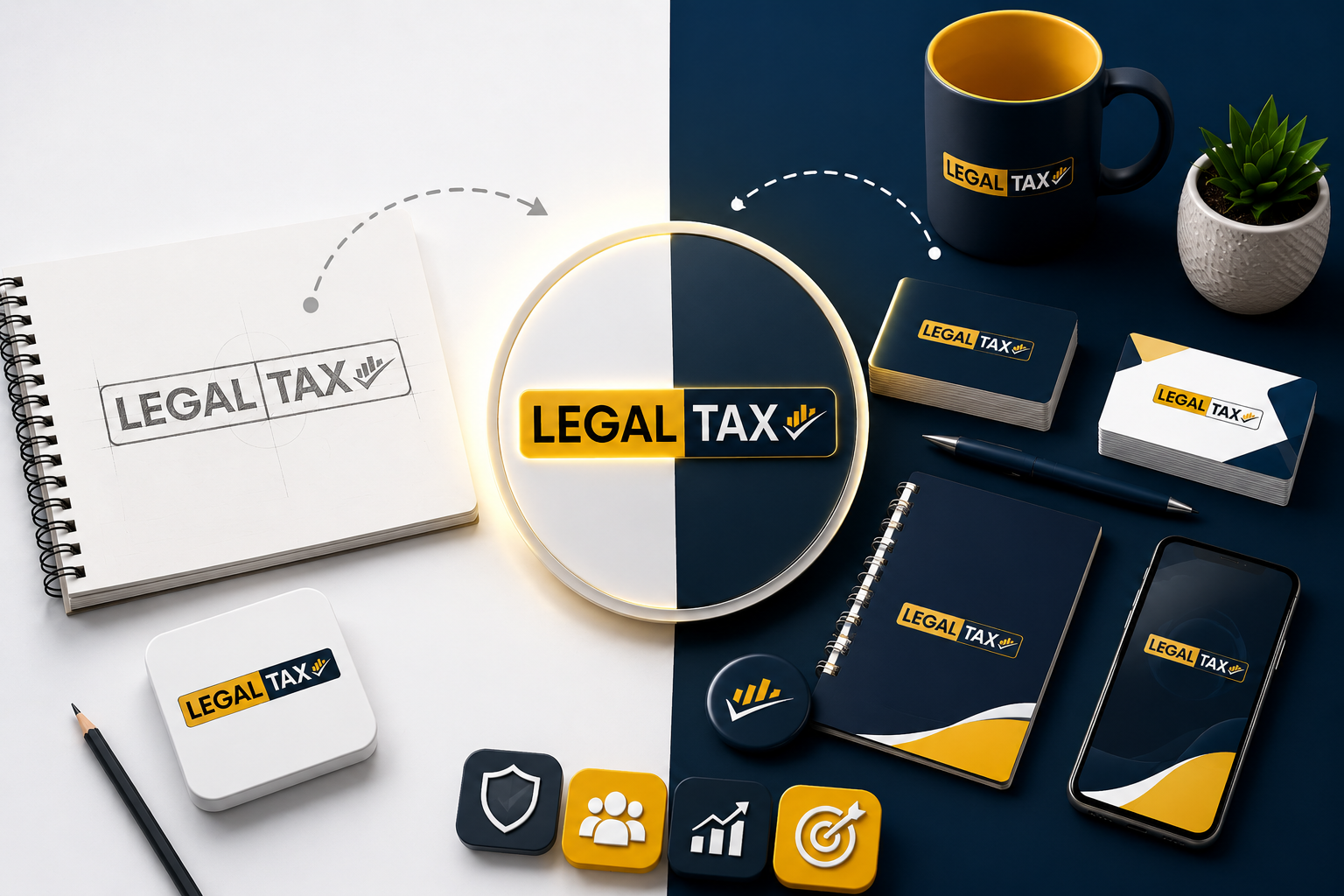
Why Indian Businesses Confuse Logo with Brand Identity
The confusion between logo and brand identity is especially common in India for several reasons that are worth understanding.
The Cost Factor
Developing a complete brand identity system is significantly more expensive than designing a logo alone. For budget-conscious small and medium businesses in India, the logo often becomes the primary or only branding investment. This is understandable financially but creates a significant strategic gap.
The Visibility Factor
The logo is the most visible and immediately recognizable element of a brand. It appears everywhere and it is the easiest element to point to and say this is our brand. The less tangible elements of brand identity, the values, the voice, the experience, are harder to see and therefore easier to overlook.
The Education Gap
Brand strategy and brand identity development as formal disciplines are still relatively underrepresented in Indian business education compared to more established markets. Many business owners simply have not been exposed to the concept of brand identity beyond the logo.
The Short-Term Mindset
Many Indian businesses are focused on immediate operational challenges and short-term growth. Brand identity is a long-term investment whose returns compound over time. The urgency of day-to-day business often pushes brand strategy to the bottom of the priority list.
Why Building a Complete Brand Identity Matters for Your Business
It Creates Consistent Customer Experience
When all elements of your brand identity work together coherently, every customer touchpoint reinforces the same impression, values, and promise. This consistency builds familiarity, and familiarity builds trust. In India, where personal recommendations and word of mouth drive a huge proportion of purchase decisions, trust is the most valuable asset a brand can have.
It Differentiates You from Competitors
In nearly every Indian market category, competition is intense. A strong brand identity gives you differentiation that goes beyond product features and price. When customers feel connected to a brand’s values, personality, and story, they become loyal in ways that no amount of discounting can replicate.
It Supports Premium Pricing
Brands with strong, coherent identities consistently command higher prices than competitors with weaker brand development. When customers trust a brand and feel connected to it, they are willing to pay a premium for that relationship. This is true across categories from chai to luxury automobiles.
It Attracts the Right Talent and Partners
A strong brand identity does not just attract customers. It attracts employees, investors, and business partners who share your values and want to be associated with your brand. In a competitive talent market, a compelling brand identity is a powerful recruitment tool.
It Protects Your Business Value
A well-developed brand identity is a significant financial asset on your business’s balance sheet. The brand equity that a strong identity builds over time represents real monetary value that can be leveraged for fundraising, partnerships, franchising, and eventual business sale.
Protecting this asset legally is therefore critically important. For all matters related to trademark registration, intellectual property strategy, and brand asset protection in India, OnlineTrademark India and LegalIP.in are your most reliable professional resources.
How to Build a Brand Identity Beyond Your Logo
Step One: Define Your Brand Strategy
Before any design work begins, invest time in developing your brand strategy. This includes defining your brand purpose which is why your business exists beyond making money, your brand values which are the principles that guide every business decision, your brand positioning which is how you want to be perceived relative to competitors, and your target audience which is a detailed profile of your ideal customer.
This strategic foundation is the brief that all subsequent brand identity development must respond to. Without it, design decisions are made in a strategic vacuum.
Step Two: Develop Your Visual Identity System
With a clear brand strategy in place, develop your complete visual identity system. This goes well beyond the logo to include all the visual elements described earlier: color palette, typography, iconography, illustration style, photography guidelines, and graphic elements.
All of these should be documented in a comprehensive brand guidelines document that specifies exactly how each element is to be used and not used. This document ensures consistency across all applications and by all team members, agencies, and vendors who work with your brand.
Step Three: Define Your Brand Voice
Develop clear guidelines for how your brand writes and speaks. Define your brand’s vocabulary, the words and phrases you use and avoid. Define your tone for different contexts, how you write in social media versus how you write in formal business communications. Ensure that everyone who creates content for your brand understands and follows these voice guidelines.
Step Four: Design Your Brand Touchpoints
Apply your brand identity system consistently across every customer touchpoint. This includes your website, your mobile app if applicable, your social media profiles and content, your physical store or office environment, your product packaging, your stationery and business documents, your uniforms and merchandise, your advertising and marketing materials, and your customer service communications.
Each of these touchpoints is an opportunity to reinforce your brand identity and deepen the relationship with your customers.
Step Five: Protect Your Brand Identity Legally
Once your brand identity is developed, put comprehensive legal protections in place. Register your logo as a trademark with the Indian Trademark Registry. Register your business name as a trademark. If your brand uses distinctive packaging design or trade dress, explore registering those elements as well.
Ensure that all creative work produced for your brand by external designers and agencies is covered by proper intellectual property assignment agreements, transferring full copyright ownership to your business. Without these agreements, the creators of your brand assets technically retain copyright ownership even after you have paid for the work.
For detailed guidance on copyright assignment, trademark registration strategy, and comprehensive brand IP protection, LegalIP.in is the right resource for Indian businesses serious about protecting what they build.
The Legal and Financial Dimensions of Logo vs Brand Identity
Registering Your Logo as a Trademark
As mentioned throughout this guide, your logo must be registered as a trademark to receive the strongest available legal protection in India. The application is filed with the Trademark Registry of India, and once registered, gives you exclusive rights to use that mark for the goods and services specified in your application.
The registration process involves conducting a trademark search, filing the application, examination by the registry, publication in the Trademark Journal, and if no opposition is filed within four months of publication, issuance of the registration certificate. The entire process typically takes twelve to twenty-four months, but the TM symbol can be used from the date of application.
For professional assistance with every step of this process, contact the experts at OnlineTrademark India, where experienced trademark professionals guide Indian businesses through trademark filing, examination responses, and opposition proceedings.
GST and Tax Treatment of Brand Development Expenses
Investing in brand identity development, including logo design, brand strategy consulting, brand guidelines development, and website design, involves professional services that attract 18 percent GST in India. These expenses are generally deductible as business expenses under the Income Tax Act.
If you are a GST-registered business, the GST paid on these professional services can typically be claimed as input tax credit, reducing your overall tax liability. Proper documentation including GST invoices from all service providers is essential for claiming these benefits.
For expert guidance on GST compliance, income tax deductions for business expenses, and financial planning for your brand development investment, LegalTax.in provides reliable professional services for Indian businesses at all stages of growth. You can also reach the team directly at +919711939395 for personalized assistance with your business’s legal and tax requirements.
Brand Identity as an Intangible Asset
From an accounting and financial perspective, brand identity can be recognized as an intangible asset on your business’s balance sheet, particularly when it has been developed at significant cost and contributes demonstrably to revenue generation. As your brand equity grows, so does the financial value of this asset.
Understanding how to properly account for brand-related expenditures and assets, and how to maximize legitimate tax benefits on branding investments, is an area where professional financial and legal guidance pays significant dividends. LegalTax.in offers expert support for Indian businesses navigating these financial and compliance questions.
Practical Tips for Indian Businesses Building Their Brand Identity
Start with Strategy, Not Design
The biggest mistake Indian businesses make is starting with design instead of strategy. Before you brief a designer on your logo, develop a clear brand strategy document. It will make every subsequent design decision faster, cheaper, and more effective.
Invest Proportionally to Your Stage
You do not need a complete Fortune 500 level brand identity system on day one. But even at the earliest stage, invest in at least a professionally designed logo, a defined color palette, a chosen primary typeface, and a basic brand voice guideline. These essentials create the foundation on which you can build as your business grows.
Be Consistent Relentlessly
Consistency is the single most important factor in building brand recognition and trust. Every time your brand appears in any form, it should look, sound, and feel like the same brand. Inconsistency confuses customers and undermines the brand equity you are working to build.
Protect Early and Protect Completely
Do not wait until your brand is large and successful before investing in legal protection. Trademark your logo as early as possible, ensure all IP agreements with designers and agencies are in place, and get professional advice on your overall IP protection strategy from the beginning.
FAQs
1: What is the difference between a logo and brand identity?
A logo is a visual symbol that represents a business, while brand identity includes all visual and communication elements such as colors, typography, messaging, and overall brand personality.
2: Is a logo enough to build a strong brand?
No, a logo alone is not enough. A strong brand identity combines logo design, color schemes, fonts, brand voice, and customer experience to create a lasting impression.
3: Why is brand identity important for businesses?
Brand identity helps businesses build trust, improve recognition, differentiate themselves from competitors, and create a consistent image across all platforms.
4: Can a business change its logo without changing brand identity?
Yes, businesses can redesign their logo while maintaining their core brand identity. Many brands update logos over time while keeping their values and brand message consistent.
5: How can Indian businesses create a strong brand identity?
Indian businesses can create a strong brand identity by understanding their audience, defining brand values, maintaining visual consistency, and using a professional logo with a clear brand strategy.
6: Should startups invest in brand identity from the beginning?
Yes, startups should invest in brand identity early because a consistent brand image helps build credibility, improve customer trust, and create stronger market recognition from the start.
Conclusion: Your Logo Is the Start, Not the Finish
The difference between logo and brand identity is the difference between a signature and a complete personality. Your logo signs your name. Your brand identity is everything about who you are.
For Indian businesses building for the long term, investing in a complete brand identity that goes well beyond the logo is one of the highest-return strategic decisions you can make. It builds recognition, earns trust, commands premium pricing, attracts the right customers and partners, and creates a business asset that appreciates in value over time.
And once that brand identity is built, protect every element of it with the same seriousness you would bring to protecting any other valuable business asset.
For intellectual property protection, copyright guidance, IP assignment agreements, and comprehensive brand asset protection strategy, visit LegalIP.in. For trademark registration of your logo and brand name in India, visit OnlineTrademark India. For GST compliance, tax planning, and all legal and financial matters related to your business, visit LegalTax.in or call directly at +919711939395.
Build your brand with intention. Protect it with expertise. That is how Indian businesses create legacies that last.

I’m Aryan Yadav, passionate about SEO and Digital Marketing with a strong interest in helping businesses grow online. I enjoy learning new strategies, exploring digital trends, and creating ideas that deliver value. I believe in continuous growth, creativity, and building meaningful results through smart work and dedication.
Our Clients