Views: 14
Table of Contents
- 1 Introduction
- 2 What is a Logo and Why Does It Matter for Indian Businesses
- 3 Types of Logos: Which One is Right for Your Business
- 4 Logo Design Process: Step-by-Step for Indian Businesses
- 5 Logo Design Cost in India: What to Expect in 2026
- 6 Colors, Fonts, and Symbols: Design Decisions That Matter
- 7 Legal Protection for Your Logo: Trademark Registration in India
- 8 Common Logo Design Mistakes Indian Businesses Make
- 9 Logo Design Tips for Specific Industries in India
- 10 How to Brief a Logo Designer: A Quick Checklist
- 11 Frequently Asked Questions (FAQs)
- 12 Conclusion: Your Logo Is an Investment, Not an Expense
Introduction
A strong logo is the face of your brand. For Indian businesses, whether you are a small startup in Pune, a family business in Rajasthan, or a growing D2C brand in Bengaluru, your logo is the very first impression you make on your customers. In 2026, with competition fiercer than ever across every industry, having a well-designed, legally protected logo is not a luxury but a necessity.
This complete logo design guide for Indian businesses covers everything you need to know: types of logos, design process, cost breakdown, how to protect your logo legally, and expert tips to get it right the first time.
What is a Logo and Why Does It Matter for Indian Businesses
A logo is a visual symbol that represents your brand identity. It appears on your packaging, website, social media, visiting cards, invoices, signage, and every touchpoint where your customer meets your brand.
For Indian businesses especially, where trust plays a huge role in purchase decisions, a professional logo signals credibility. It tells your customer that you are serious about your business. A poorly designed logo, on the other hand, can reduce trust before a single conversation even begins.
Beyond aesthetics, a logo is also a legal asset. Once you register it as a trademark, it becomes your intellectual property, something competitors cannot copy or misuse. This is why logo design and trademark registration go hand in hand for smart business owners.
If you want to understand the legal side of protecting your brand identity, LegalIP.in is an excellent resource where you can find guidance on intellectual property rights for Indian businesses.
Types of Logos: Which One is Right for Your Business
Understanding the different types of logos is the first step in the logo design process. Each type works differently depending on your brand, industry, and target audience.
Wordmark Logo
A wordmark is a text-only logo that uses the business name in a unique typographic style. Think of brands like Google, Coca-Cola, and FedEx. For Indian businesses, wordmarks work well when the brand name itself is distinctive and memorable.
Wordmarks are clean, scalable, and easy to use across print and digital media. If your business name is short and punchy, a wordmark can be an ideal choice.
Lettermark Logo
A lettermark uses initials or abbreviations of the business name. For example, IBM, HP, or closer home, LIC and HDFC. Lettermarks are useful when the full business name is long or complex.
This type of logo is common among Indian businesses in sectors like finance, law, healthcare, and manufacturing where abbreviated names have become well-known over time.
Pictorial Mark or Icon Logo
A pictorial mark is a graphic-only logo with no text. Apple’s apple icon or Twitter’s bird are global examples. In India, brands like BSNL and Air India have used iconic visual symbols.
Pictorial marks work best for established businesses where customers already know the brand name and just need a visual trigger to identify it.
Abstract Logo
An abstract logo uses geometric shapes or abstract visual forms to represent the brand. It does not depict a literal object but instead conveys a concept or feeling. Nike’s swoosh is a globally recognized abstract mark.
For Indian businesses targeting modern, urban, or tech-savvy audiences, abstract logos offer a lot of creative freedom.
Combination Mark
A combination mark pairs text and a symbol together, either side by side or integrated. This is the most popular logo type for new and growing Indian businesses because it gives you both a visual symbol and a text identifier.
Brands like Amul, Tata, and Reliance use combination marks that are recognized nationwide. For new businesses, this is often the recommended starting point.
Emblem Logo
An emblem logo features text placed inside or around a symbol or badge shape. Government agencies, educational institutions, and traditional businesses in India frequently use emblem logos. They convey authority, heritage, and trust.
For businesses in sectors like education, legal services, or food, emblems can project a strong sense of credibility.
Dynamic or Responsive Logo
In 2026, responsive logos have become increasingly important. A dynamic logo adapts its shape, color, and layout based on where it is used, whether on a smartphone screen, a billboard, or a small favicon. Indian digital-first businesses and apps are increasingly adopting this approach.
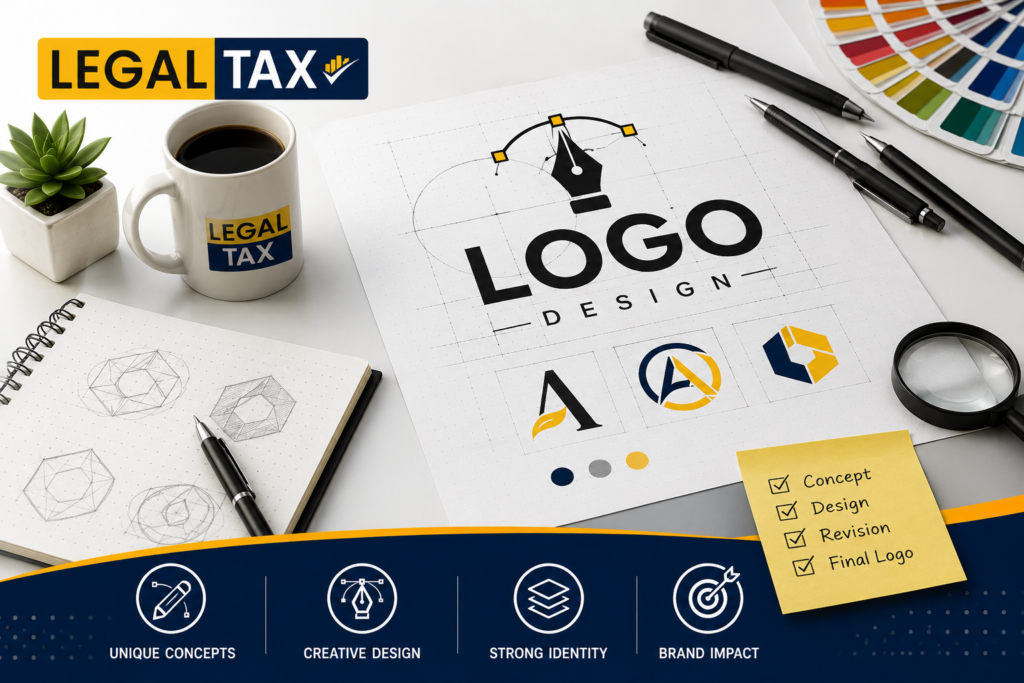
Logo Design Process: Step-by-Step for Indian Businesses
A good logo does not happen by accident. Whether you hire a designer or use a design platform, following a structured process ensures you get a result that truly reflects your brand.
Step 1: Define Your Brand Identity
Before any design work begins, clarify the fundamentals of your brand. Ask yourself: What does my business do? Who are my target customers? What values does my brand stand for? What emotions do I want customers to feel when they see my logo?
For an Indian business, cultural context also matters. Colors, symbols, and design elements carry meaning that can vary significantly across regions and communities.
Step 2: Research Your Competitors and Industry
Look at the logos used by your direct competitors and leading brands in your industry. Identify visual trends, common colors, and design styles. The goal is not to copy but to understand the visual language of your space and find a way to stand out.
Step 3: Explore Concepts and Gather References
Collect references from logos you admire and create a mood board. Share this with your designer so they understand your aesthetic preferences. At this stage, also decide which type of logo, as listed above, suits your business best.
Step 4: Work with a Professional Designer or Design Platform
For Indian businesses, there are several options. You can hire a freelance graphic designer on platforms like Behance or local design communities. You can work with a branding agency. Or you can use AI-powered logo design tools, though these often require significant manual refinement.
Whichever route you choose, ensure the designer understands Indian market sensibilities, regional preferences, and the industry you operate in.
Step 5: Review Multiple Concepts
A professional designer will typically provide two to four initial logo concepts. Review each option critically against your brand brief.Step 6: Refine and Finalize the Design
Once you select the concept you like most, work with your designer on refinements. This includes adjusting colors, font styles, spacing, proportions, and how the logo looks at different sizes. Always test your logo in real-world contexts such as on a white background, a dark background, a visiting card mockup, a product label, and a mobile screen.
Make sure the final logo works well in both color and black-and-white versions, as you will need both for various print and digital applications.
Step 7: Receive Final Files in All Required Formats
Once the design is finalized, ensure you receive the logo in the following formats:
SVG and AI or EPS for vector files that can be scaled to any size without losing quality. PNG with transparent background for digital use. JPEG for general use. PDF for print purposes.
Ask your designer to provide variations including horizontal layout, stacked layout, icon-only version, and black-and-white version.
Step 8: Protect Your Logo Legally
This is a step many Indian business owners skip, and it can be a costly mistake. Once your logo is finalized, it should be registered as a trademark to prevent others from copying or using a similar design. Trademark registration gives you exclusive legal rights over your logo in India.
You can get complete guidance on the trademark registration process for logos at OnlineTrademark India, which specializes in helping Indian businesses protect their brand assets.
Logo Design Cost in India: What to Expect in 2026
One of the most common questions Indian business owners ask is how much a logo should cost. The answer depends on who designs it and what is included in the package.
Freelance Designer
A beginner to mid-level freelance designer in India typically charges between Rs 2,000 and Rs 15,000 for a logo. An experienced senior designer or a specialist brand identity designer may charge anywhere from Rs 20,000 to Rs 80,000 or more depending on the complexity of the project and the deliverables included.
Branding Agency
Working with a professional branding agency in India for a complete logo and brand identity package usually starts at Rs 50,000 and can go up to Rs 5,00,000 or more for premium agencies serving large businesses.
DIY Design Platforms
Platforms like Canva, Looka, or Hatchful allow business owners to create a logo themselves at low or no cost. However, the results may lack originality and may not be legally unique enough for trademark registration.
What Should Be Included in the Cost
Regardless of what you pay, ensure the cost includes: full copyright and usage rights transferred to your business, vector source files in AI or EPS format, multiple logo variations, a basic brand style guide with color codes and font names, and a reasonable number of revision rounds.
For understanding how intellectual property ownership works when you commission a logo from a designer, LegalIP.in has detailed articles on copyright assignment and IP rights that Indian business owners will find very useful.
Contact NowColors, Fonts, and Symbols: Design Decisions That Matter
Choosing the Right Colors for Your Logo
Color psychology plays a significant role in how your brand is perceived. In the Indian market, color also carries deep cultural associations.
Red conveys energy, passion, and urgency and is widely used in food, retail, and entertainment brands. Blue represents trust, professionalism, and stability and is a common choice for finance, healthcare, and technology businesses. Green is associated with growth, nature, and health and works well for organic, wellness, and agricultural brands. Saffron and gold carry strong cultural and traditional associations in India and are often used by businesses that want to project heritage and authenticity. Black and white convey premium quality, minimalism, and sophistication.
When choosing colors for your logo, always check how they look on screen and in print, as colors can appear differently across mediums.
Choosing the Right Font or Typography
Typography is just as important as the symbol in your logo. Fonts carry personality. A serif font projects tradition, authority, and reliability. A sans-serif font feels modern, clean, and approachable. A script or handwritten font conveys creativity, warmth, and personal touch. A display or decorative font can make a bold statement but must be used carefully.
For Indian businesses, if your logo needs to appear in a regional language script such as Devanagari, Tamil, Telugu, or Bengali, ensure your designer has expertise in designing with that script. Typography in regional languages requires specialized knowledge to look professional and balanced.
Using Symbols and Icons Carefully
If your logo includes a symbol or illustration, ensure it does not inadvertently resemble or copy an existing logo. This is both a design concern and a legal concern. Copying or closely imitating another brand’s logo can lead to trademark infringement disputes.
Before finalizing your logo, it is advisable to conduct a trademark search to make sure no similar logo or mark is already registered in your category. You can initiate a trademark search and understand the process at OnlineTrademark India, which provides end-to-end assistance for Indian businesses.
Legal Protection for Your Logo: Trademark Registration in India
Designing a great logo is only half the work. Protecting it legally is equally important and something every Indian business owner must take seriously.
Why Trademark Registration Is Important
When you register your logo as a trademark in India under the Trade Marks Act 1999, you get exclusive rights to use that logo for the goods or services specified in your registration. If anyone else uses a similar logo for similar products or services, you have legal grounds to take action against them.
Without trademark registration, even if you have been using a logo for years, proving ownership in a legal dispute is much harder. Registration creates a public record of your ownership from the date of application.
How to Register a Logo as a Trademark in India
The trademark registration process in India involves conducting a trademark search to check availability, filing an application with the Trademark Registry under the appropriate class or classes, examination by the registry, publication in the Trademark Journal, and if no opposition is filed, receiving the registration certificate.
The entire process typically takes twelve to twenty-four months in India, though the applied-for mark can be used with the TM symbol from the date of application.
For complete step-by-step guidance and professional assistance with filing your logo trademark, visit OnlineTrademark India.
Copyright Protection for Logos
In addition to trademark registration, a logo is also protected under copyright law in India the moment it is created as an original artistic work. Copyright gives you rights against reproduction and copying. However, for commercial brand protection, trademark registration is far stronger and more enforceable.
To understand how both copyright and trademark protection work together for your logo and brand identity, LegalIP.in offers detailed resources and expert consultation for Indian businesses navigating intellectual property law.
GST and Legal Compliance for Design Services
When you hire a designer or agency for logo design, the transaction is subject to GST. Professional design services in India attract 18 percent GST. Ensure you receive a proper GST invoice from your service provider so you can claim input tax credit if you are a registered GST taxpayer.
For guidance on GST compliance related to professional services, business registration, and other tax matters, LegalTax.in is a trusted resource that helps Indian businesses stay compliant with their tax and legal obligations.
Common Logo Design Mistakes Indian Businesses Make
Using Too Many Colors
A logo with five or six colors may look attractive on a computer screen but becomes a nightmare for print production, embroidery, or single-color applications. Limit your logo to two or three colors maximum.
Choosing Trendy Fonts That Date Quickly
Design trends change fast. A font that feels fresh today may look outdated in three years. Choose a timeless, clean typeface over something that is currently fashionable but lacks staying power.
Making the Logo Too Complicated
A complex logo with too many details loses clarity when scaled down. Your logo must be recognizable even at the size of a small social media profile picture or a favicon. Simplicity is always a strength in logo design.
Not Thinking About Scalability
Always test your logo at very small sizes such as 32 by 32 pixels and at very large sizes such as on a billboard or vehicle wrap. A good logo must work at every scale.
Skipping the Trademark Search
Many Indian businesses invest in a logo, print packaging, launch their brand, and then discover that a similar trademark already exists. This can force a complete rebrand at great cost. Always conduct a trademark search before finalizing your logo.
Not Owning the Source Files
Some designers retain the source files and only hand over a JPG or PNG. Always ensure your contract specifies that all source files including the original vector AI or EPS file are transferred to you upon final payment.
For legally sound agreements when commissioning design work, understanding contract basics and intellectual property assignment clauses is important. LegalIP.in provides helpful guidance on IP assignment agreements for Indian businesses.
Logo Design Tips for Specific Industries in India
Logo Tips for Food and Beverage Businesses
Warm colors like red, orange, and yellow stimulate appetite and work well in this sector. Include FSSAI compliance information on packaging alongside your logo. If you sell packaged food, your logo and label design must comply with FSSAI regulations.
Logo Tips for Technology and SaaS Startups
Clean, geometric, and minimal designs work best. Blue, purple, and teal are popular in this space. Your logo must look great as an app icon on a smartphone.
Logo Tips for Healthcare and Wellness
Trust and cleanliness are the primary associations here. Blue, green, and white are dominant. Avoid overly playful fonts. Ensure your design does not inadvertently use protected symbols like the Red Cross.
Logo Tips for Legal and Financial Services
Professionalism and authority must come through the design. Dark navy, deep green, and gold are popular choices. Serif fonts work particularly well. If you are starting a legal services firm or financial advisory, protecting your brand name and logo early through trademark registration is especially important. LegalTax can help you with the legal and compliance aspects of setting up and protecting your professional services business.
Logo Tips for Retail and E-Commerce Brands
Your logo needs to work across packaging, hangtags, shopping bags, social media, and your website. Versatility is critical. Consider how the logo looks on both light and dark product backgrounds.
How to Brief a Logo Designer: A Quick Checklist
When approaching a designer for your logo, provide a clear written brief that includes your business name and tagline if any, a description of your products or services, your target audience including age group, location, and lifestyle, three to five brands whose logos you admire and why, colors you prefer or want to avoid, any symbols or imagery that are relevant or irrelevant to your brand, where the logo will primarily be used such as digital, print, packaging, or outdoor, and your budget and expected timeline.
A well-written brief saves time, reduces revisions, and results in a better final logo.
Frequently Asked Questions (FAQs)
1: What are the different types of logo designs for businesses?
There are several types of logo designs including wordmark logos, lettermark logos, brandmark logos, combination logos, emblem logos, mascot logos, and abstract logos. The right type depends on your business goals, industry, and brand identity.
2: How much does logo design cost in India in 2026?
Logo design costs in India can vary widely. Freelancers may charge ₹1,000–₹10,000, design agencies can charge ₹10,000–₹1,00,000+, while premium branding firms may charge significantly more depending on research, revisions, and branding strategy.
3: How long does the logo design process take?
A professional logo design process typically takes anywhere between 3 days to 3 weeks. The timeline depends on factors such as design complexity, revision rounds, and client requirements.
4: What information should I provide to a logo designer?
You should provide details such as business name, industry type, target audience, brand colors, design preferences, competitors, and examples of logos you like. Clear requirements help create a more suitable logo.
5: Why is a professional logo important for Indian businesses?
A professional logo helps establish brand identity, creates trust, improves brand recognition, and makes a business appear more credible in competitive markets.
6: What are the key tips for creating an effective logo design?
A good logo should be simple, memorable, scalable, relevant to the business, and versatile across websites, social media, packaging, and marketing materials. Avoid overly complex designs and follow modern design trends.
Conclusion: Your Logo Is an Investment, Not an Expense
For Indian businesses in 2026, a professionally designed and legally protected logo is one of the best investments you can make in your brand. It builds recognition, establishes trust, and becomes an asset that grows in value as your business grows.
Take the time to go through the process properly. Define your brand identity, choose the right type of logo, work with a qualified designer, finalize the design through careful testing, and then register your logo as a trademark to protect it for years to come.
For tax compliance and business legal support, visit LegalTax.in. For trademark registration and intellectual property protection of your logo, visit OnlineTrademark India. For broader intellectual property guidance including copyright and IP assignment for your brand assets, visit LegalIP.in.
Your logo is not just a design. It is your brand’s identity, your legal asset, and your first handshake with every customer you will ever have. Invest in it wisely.

I’m Aryan Yadav, passionate about SEO and Digital Marketing with a strong interest in helping businesses grow online. I enjoy learning new strategies, exploring digital trends, and creating ideas that deliver value. I believe in continuous growth, creativity, and building meaningful results through smart work and dedication.
Our Clients