Views: 17
You have spent years building your business. You have invested time, money, and passion into creating a brand that your customers recognize and trust. Your brand name, your logo, your tagline represent everything your business stands for. But here is the harsh reality: without trademark registration, none of it is legally protected.
Anyone can copy your brand name. Anyone can use a similar logo. A competitor can register your brand name as their trademark and legally stop you from using it in your own business. This is not a hypothetical scenario. It happens to thousands of Indian businesses every year, from small startups to established companies.
Trademark Registration in India is the only legal tool that gives you exclusive ownership over your brand identity. It is your shield against copycats, brand thieves, and unfair competition. This comprehensive guide for 2026 covers everything you need to know about trademark registration in India, from what a trademark is and why it matters, to the complete registration process, types of trademarks, costs, objections, and how to protect your brand for life.
Table of Contents
- 1 What is a Trademark and Why Does Your Business Need One
- 2 Types of Trademarks You Can Register in India
- 3 What Can and Cannot Be Registered as a Trademark
- 4 Trademark Classes in India: Choosing the Right Class
- 5 Trademark Registration Process in India: Step by Step
- 6 Trademark Fees in India: How Much Does It Cost
- 7 Trademark Validity and Renewal
- 8 Using TM and R Symbols Correctly
- 9 Trademark Assignment and Licensing
- 10 Protecting Your Brand Beyond Trademark Registration
- 11 Common Trademark Mistakes Indian Businesses Must Avoid
- 12 Conclusion
What is a Trademark and Why Does Your Business Need One
A trademark is any word, name, symbol, logo, slogan, sound, color, or combination of these elements that identifies your goods or services and distinguishes them from those of other businesses. It is a form of intellectual property that gives the owner exclusive rights to use the mark in connection with specific goods or services.
When you register a trademark in India, you receive a certificate of registration that serves as legal proof of your ownership. You get the exclusive right to use the mark across India in the class of goods or services for which it is registered. You also get the legal right to take action against anyone who copies, imitates, or uses a confusingly similar mark without your permission.
Without trademark registration, your brand has no formal legal protection. You may have been using the name for years, but if someone else registers it as a trademark before you, they can legally claim ownership and even send you a cease and desist notice demanding that you stop using your own brand name.
For professional trademark registration services that protect your brand quickly and effectively, OnlineTrademarkIndia.com and LegalIP.in are trusted platforms with experienced trademark attorneys who handle the entire process on your behalf.
Types of Trademarks You Can Register in India
India’s trademark law under the Trade Marks Act, 1999 allows registration of a wide variety of marks. Understanding the types of trademarks helps you decide what elements of your brand to protect.
Word Mark
A word mark protects a brand name, word, or combination of words in any font or style. For example, registering your business name as a word mark means no one else can use that name for similar goods or services, regardless of the font, color, or style they use. A word mark provides broader protection than a device mark because it covers the word itself, not just a specific visual representation.
Device Mark or Logo Mark
A device mark protects a specific logo, symbol, or graphic design. If your business has a distinctive logo that customers recognize, registering it as a device mark prevents others from using the same or similar visual design. Many businesses register both their word mark and device mark separately for comprehensive protection.
Combined Mark
A combined mark is a trademark that includes both a word element and a graphical or logo element together. It protects the specific combination of text and design as a single mark.
Sound Mark
A sound mark protects a distinctive sound or jingle associated with a brand. Famous examples globally include the Intel chime and the MGM lion roar. In India, sound marks can be registered if the sound is distinctive and functions as a brand identifier.
Color Mark
A color or combination of colors can be registered as a trademark if it is distinctively associated with a specific brand. This type of registration is rare and requires proof that consumers recognize the color as being uniquely associated with your brand.
Three-Dimensional Mark
The shape of a product or its packaging can be registered as a trademark if it is distinctive and not purely functional. This protects unique product shapes that consumers associate with a specific brand.
Collective Mark and Certification Mark
A collective mark is used by members of a collective organization to indicate membership. A certification mark is used to certify that goods or services meet a certain standard of quality or origin.
What Can and Cannot Be Registered as a Trademark
Not everything can be registered as a trademark. Understanding the registrability criteria helps you choose a strong trademark that will be approved by the Trade Marks Registry.
Characteristics of a Strong Trademark
The strongest trademarks are invented or coined words that have no prior meaning, such as Kodak or Xerox. Arbitrary marks, which are real words applied in an unrelated context, are also strong. Suggestive marks that hint at the qualities of the product without describing them directly are registrable. Fanciful or distinctive marks have the best chance of registration and the broadest legal protection.
Marks That Cannot Be Registered
Descriptive marks that simply describe the goods or services cannot be registered. For example, “Fresh Juice” for a juice brand or “Fast Delivery” for a courier service would be refused. Generic terms that are the common name for the product also cannot be registered. Marks that are deceptive, contrary to public morality, or likely to cause confusion with existing registered trademarks are also refused registration.
Marks that include national flags, emblems of government bodies, names of international organizations, or words like “India,” “Bharat,” “Government,” or “National” without specific permission are also not registrable.
Call Now : +919711939395Trademark Classes in India: Choosing the Right Class
India follows the Nice Classification system, which divides all goods and services into 45 classes. Classes 1 to 34 cover goods and classes 35 to 45 cover services. When you file a trademark application, you must specify the class or classes under which you want to register the mark.
Why Class Selection Matters
Your trademark protection is limited to the class or classes in which it is registered. A trademark registered only in Class 25 for clothing does not give you rights over the same name in Class 43 for restaurants. Choosing the right class or multiple classes at the time of registration ensures comprehensive protection across all areas where your brand operates.
Common Trademark Classes for Indian Businesses
Class 25 covers clothing, footwear, and headgear. Class 35 covers advertising, business management, and retail services. Class 41 covers education and entertainment services. Class 42 covers technology and software services. Class 43 covers restaurant and hospitality services. Class 44 covers medical and beauty services. Class 45 covers legal and security services.
For expert guidance on selecting the correct trademark class for your business and filing a comprehensive trademark application, OnlineTrademarkIndia.com provides specialized trademark services with class selection expertise.
Trademark Registration Process in India: Step by Step
The trademark registration process in India is managed by the Office of the Controller General of Patents, Designs and Trade Marks (CGPDTM) under the Ministry of Commerce and Industry. The process is largely online and can be completed through the IP India portal at ipindia.gov.in.
Step 1: Conduct a Trademark Search
Before filing a trademark application, it is essential to conduct a thorough trademark search to check whether the same or a similar mark is already registered or pending registration in your chosen class.
How to Conduct a Trademark Search
The IP India portal provides a free trademark search facility. You can search by wordmark, Vienna Code for logos, or proprietor name. However, the public search tool has limitations and may not capture all similar marks effectively.
A professional trademark attorney conducts a comprehensive search that includes not just identical marks but also phonetically similar, visually similar, and conceptually similar marks. This gives you a realistic assessment of the chances of registration before you invest in filing the application.
For a thorough professional trademark search, LegalIP.in provides detailed search reports that help you make an informed decision before filing.
Step 2: File the Trademark Application
Once the trademark search confirms that your mark is available, the next step is filing the trademark application on the IP India portal.
Information Required for Filing
The application requires the applicant’s name and address, the trademark to be registered (word, logo, or combination), the class or classes of goods or services, a description of the goods or services, the date of first use of the mark in India (if already in use), and the applicant’s signature or digital signature.
User Application vs. Proposed to Be Used
If you are already using the trademark in business, you file as a “Use” application and mention the date of first use. If you have not yet started using the trademark, you file as a “Proposed to be Used” application.
Individual vs. Company Filing
Individuals, proprietors, partnerships, companies, LLPs, and trusts can all file trademark applications. The application can be filed by the trademark owner directly or through a registered trademark agent or attorney.
Step 3: Examination by the Trade Marks Registry
After filing, the Trade Marks Registry assigns an examiner to review the application. The examiner checks whether the mark meets all legal requirements and whether it conflicts with any existing registered or pending trademarks.
Examination Report
Within a few months of filing, the examiner issues an Examination Report. If the examiner finds no objections, the application is accepted and moved to the next stage. If the examiner raises objections, the applicant must respond to those objections within 30 days, extendable to a maximum of 2 months.
Step 4: Respond to Trademark Objection
A trademark objection is not a rejection. It is a formal query raised by the examiner requiring clarification or argument. Many trademark applications face objections, but most can be successfully overcome with a well-drafted response.
Common Grounds for Trademark Objection
Objections are commonly raised when the mark is considered descriptive, lacks distinctiveness, is similar to an existing registered mark, or contains prohibited words or symbols. The applicant must file a written response explaining why the objection should be overruled, supported by legal arguments, evidence of use, and precedents from similar cases.
If the examiner is not satisfied with the written response, a hearing is scheduled where the applicant or their attorney can present arguments in person or virtually before the Registrar.
For expertly drafted trademark objection replies that significantly improve your chances of acceptance, OnlineTrademarkIndia.com and LegalIP.in have experienced trademark attorneys who handle objection replies and hearings with a strong track record of success.
Step 5: Publication in the Trade Marks Journal
Once the examiner accepts the application (either directly or after the objection is resolved), the trademark is published in the Trade Marks Journal. The Journal is published weekly on the IP India website.
Publication gives the public an opportunity to oppose the registration of the trademark if they believe it conflicts with their existing rights. The opposition period is 4 months from the date of publication.
Step 6: Opposition Period
During the 4-month opposition period, any third party who believes the trademark should not be registered can file a Notice of Opposition with the Trade Marks Registry. If no opposition is filed within 4 months, the trademark proceeds to registration.
Handling Trademark Opposition
If an opposition is filed, the applicant must file a counter-statement within 2 months. The opposition is then decided through a quasi-judicial proceeding before the Registrar of Trade Marks, involving filing of evidence, written arguments, and hearings.
Trademark opposition proceedings can be complex and require expert legal representation. LegalIP.in provides specialized trademark opposition and litigation services to protect your registration.
Step 7: Issuance of Trademark Registration Certificate
If no opposition is filed, or if the opposition is decided in the applicant’s favor, the Trade Marks Registry issues the Trademark Registration Certificate. The certificate confirms that your trademark is registered in India, gives you the exclusive right to use the mark for the registered goods or services, and allows you to use the registered trademark symbol (R) next to your brand name or logo.
The total time from filing to registration typically ranges from 18 to 36 months, depending on whether objections or oppositions are raised. However, the filing date is considered the date of registration for priority purposes, meaning your rights are calculated from the filing date.
Trademark Fees in India: How Much Does It Cost
The government fees for trademark registration vary based on the type of applicant.
Government Fees for Online Filing
For individuals, startups, and small enterprises including MSME-registered businesses, the government fee is Rs. 4,500 per class per application for online filing. For companies and large enterprises, the government fee is Rs. 9,000 per class per application for online filing.
This means MSME-registered businesses pay exactly half the trademark registration fee compared to large companies. If your business is not yet MSME registered, getting your Udyam Registration first can save you thousands of rupees on trademark fees. For MSME Registration support, visit LegalTax.in.
Professional Fees
In addition to government fees, professional fees charged by trademark attorneys or service providers vary based on the complexity of the case and the service provider. Comprehensive trademark registration services including search, filing, and follow-up are available at competitive rates from OnlineTrademarkIndia.com.
Trademark Validity and Renewal
A registered trademark in India is valid for 10 years from the date of filing the application. It can be renewed indefinitely for successive periods of 10 years by paying the renewal fee.
Trademark Renewal Process
The renewal application must be filed within 6 months before the expiry of the current registration period. If the renewal is not filed on time, a grace period of 6 months is available after expiry, with a surcharge. If renewal is not filed even within the grace period, the trademark is removed from the register.
For trademark renewal reminders and timely renewal services, OnlineTrademarkIndia.com provides proactive renewal management to ensure your trademark never lapses.
Using TM and R Symbols Correctly
Many business owners are confused about when to use the TM symbol and when to use the R symbol.
TM Symbol
The TM symbol can be used by anyone who claims rights over a trademark, even if the trademark is not yet registered. You can use TM next to your brand name or logo from the moment you file your trademark application. It indicates that you are claiming trademark rights over the mark but does not provide the legal protection of a registered trademark.
R Symbol
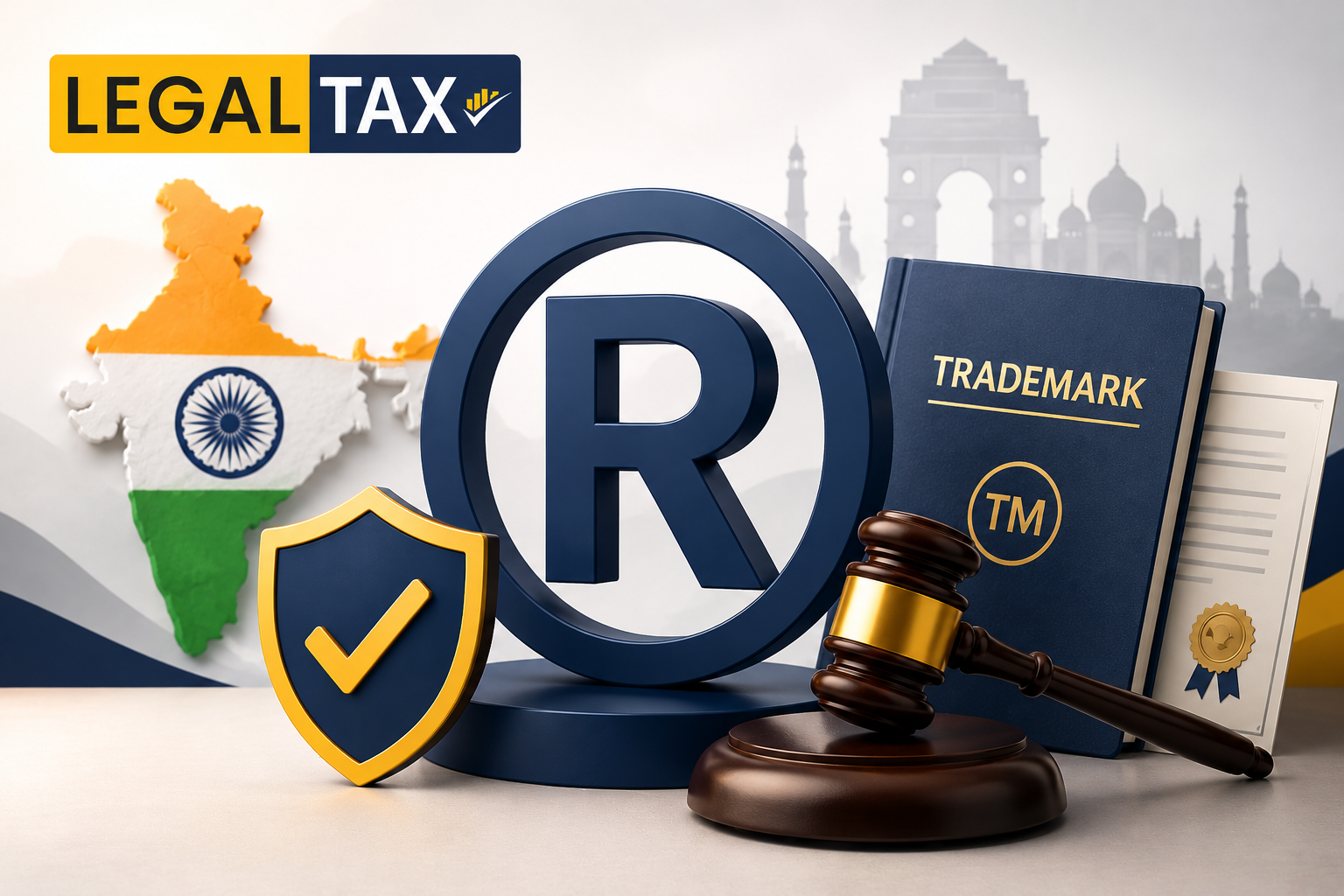
The R symbol in a circle can only be used after your trademark has been officially registered by the Trade Marks Registry and you have received the registration certificate. Using the R symbol before registration is a legal offense under the Trade Marks Act, 1999 and can result in penalties.
Trademark Assignment and Licensing
A registered trademark is a valuable business asset that can be bought, sold, or licensed.
Trademark Assignment
Trademark assignment is the transfer of ownership of a registered trademark from one person or company to another. It can be with or without the associated business goodwill. Assignment must be recorded with the Trade Marks Registry to be legally effective.
Trademark Licensing
A trademark owner can license the right to use their trademark to another business through a licensing agreement. The licensee pays a royalty to the trademark owner in exchange for the right to use the mark. Licensing allows businesses to expand their brand reach without directly entering new markets.
Protecting Your Brand Beyond Trademark Registration
Trademark registration is the foundation of brand protection, but a comprehensive intellectual property strategy involves protecting multiple aspects of your business.
Copyright Protection
If your business produces original creative content such as website content, marketing materials, software, music, or artistic works, copyright protection ensures that others cannot copy or reproduce your work without permission. Copyright in India arises automatically upon creation, but registration provides additional legal evidence of ownership.
Design Registration
If your product has a unique shape, configuration, pattern, or ornamental appearance, registering it as an industrial design under the Designs Act, 2000 protects your product’s visual appearance from being copied by competitors.
Domain Name Protection
Registering your brand name as a domain name across relevant extensions and ensuring your social media handles match your trademark prevents cybersquatting and brand impersonation online.
For a comprehensive intellectual property protection strategy covering trademarks, copyrights, designs, and patents, LegalIP.in provides complete IP advisory and registration services tailored to your business needs.
Common Trademark Mistakes Indian Businesses Must Avoid
Many Indian businesses make costly mistakes with their trademarks that can be easily avoided.
Not Conducting a Trademark Search Before Naming the Business
Choosing a business name without checking trademark availability is one of the most common and expensive mistakes. If your chosen name is already trademarked by someone else, you may be forced to rebrand entirely after investing significantly in building the brand.
Waiting Too Long to Register
Many businesses delay trademark registration thinking they will do it later. In India, trademark rights are primarily based on registration, not just use. If a competitor registers your brand name before you, they acquire legal rights over it even if you have been using it for years.
Registering in the Wrong Class
Registering a trademark only in one class while operating across multiple product or service categories leaves your brand unprotected in the categories where it is not registered. Always register in all relevant classes from the beginning.
Not Renewing the Trademark on Time
Allowing a trademark registration to lapse due to missed renewal deadlines erases years of investment in brand building. Set reminders and use professional trademark management services to ensure timely renewal.
Not Taking Action Against Infringers
A trademark registration is only valuable if you enforce it. Ignoring infringement by competitors weakens your trademark’s distinctiveness and may eventually result in the mark being challenged for non-enforcement. Act quickly when you discover infringement.
Conclusion
Your brand is your most valuable business asset. It represents your reputation, your customer relationships, and the trust you have built over years of hard work. Trademark Registration in India is the only legal tool that gives you true ownership and exclusive rights over your brand identity.
In 2026, with India’s startup ecosystem growing rapidly and competition intensifying across every sector, protecting your brand through trademark registration is not a luxury. It is a business necessity. The process is straightforward, the costs are reasonable especially for MSME-registered businesses, and the protection it provides is invaluable.
Do not wait until someone copies your brand to act. Register your trademark today, protect your intellectual property comprehensively, and build your business on a foundation that no competitor can legally challenge.
For fast, reliable, and professional trademark registration in India, visit OnlineTrademarkIndia.com and LegalIP.in for complete trademark services including search, filing, objection reply, opposition handling, and renewal. For MSME Registration to avail the 50 percent trademark fee discount, and for all your business registration and tax compliance needs, trust LegalTax.in to support your business at every stage of its growth.

I’m Aryan Yadav, passionate about SEO and Digital Marketing with a strong interest in helping businesses grow online. I enjoy learning new strategies, exploring digital trends, and creating ideas that deliver value. I believe in continuous growth, creativity, and building meaningful results through smart work and dedication.
Our Clients