Views: 11
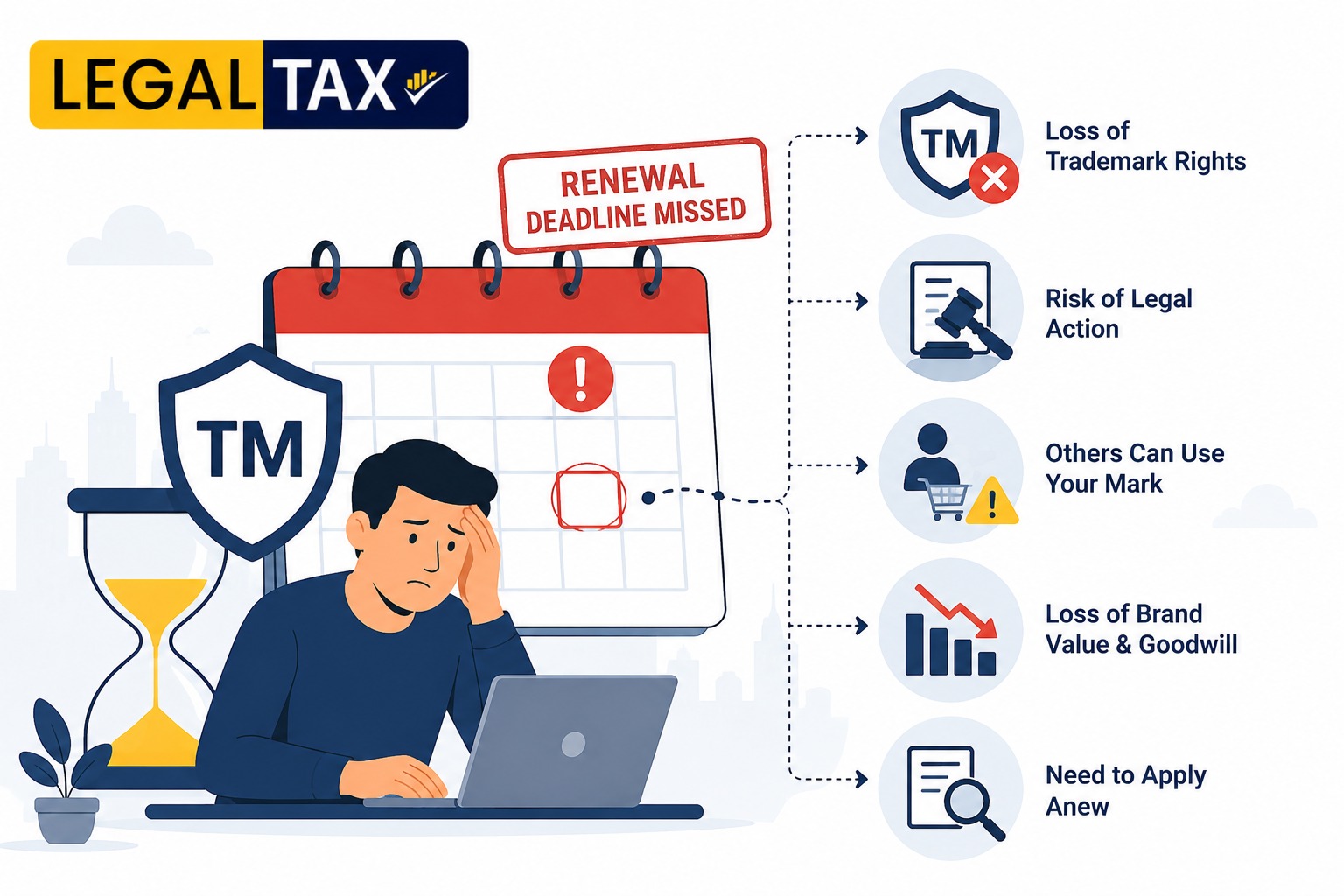
⚠️ Did You Know? A trademark registration in India is valid for only 10 years from the date of filing not the date of registration. Thousands of Indian businesses lose their registered trademark status every year not because of a legal dispute or a competitor’s challenge, but simply because they missed the renewal deadline. Once a trademark lapses and the restoration window closes, all the brand equity, legal protection, and priority rights built over years disappear and a competitor can legally register the same mark in the same class.
Table of Contents
- 1 Introduction
- 2 The Trademark Renewal Framework in India
- 3 What Happens Immediately After the Expiry Date Is Missed
- 4 What Happens After the Grace Period Ends Without Renewal
- 5 What Happens If the Restoration Window Also Closes
- 6 The Correct Renewal Timeline: What Good Trademark Management Looks Like
- 7 The Cost of Missing Each Stage
- 8 Why Trademark Renewals Are Missed: The Most Common Reasons
- 9 How to Ensure Your Trademark Never Lapses: Best Practices
- 10 Common Scenarios Where the Renewal Deadline Made a Critical Difference
- 11 Frequently Asked Questions
- 12 Conclusion
- 13 Need Help With Trademark Renewal and Registration?
Introduction
A registered trademark is not a permanent right. It is a time-limited exclusive right, renewed every 10 years to remain valid. The Trade Marks Act, 1999, and the Trade Marks Rules, 2017, set out a clear renewal framework one that includes a primary renewal window, a grace period with a surcharge, and a final restoration window. Miss all three of these windows, and the trademark is removed from the register permanently.
What makes this particularly costly for Indian businesses is that trademark registration is often treated as a one-time task. A startup files for trademark registration, waits 12 to 18 months for the certificate, and then files it away. Ten years later when founders have changed, legal teams have turned over, and the original IP counsel may no longer be engaged the renewal deadline arrives without anyone in the organisation knowing it is approaching.
This guide explains precisely what happens when a trademark renewal deadline is missed in India, what the legal consequences are, what options remain available within each window, and how to ensure your trademark registration never lapses.
The Trademark Renewal Framework in India
Before addressing the consequences of missing a deadline, it is essential to understand the three-stage renewal framework under the Trade Marks Act, 1999 and the Trade Marks Rules, 2017.
Stage 1: The Primary Renewal Window
A registered trademark must be renewed before the expiry of its 10-year registration period. The renewal application (Form TM-R) can be filed up to one year before the expiry date. This is the ideal window no surcharge, no complications, no risk of lapse.
Filing the renewal application within this primary window ensures continuous registration status with no gap in protection.
Stage 2: The Grace Period (Surcharge Window)
If the renewal application is not filed before the expiry date, the Trade Marks Rules provide a grace period of six months after the expiry date during which the trademark can still be renewed but with a prescribed surcharge in addition to the standard renewal fee.
During this grace period, the trademark continues to appear on the register (though it may be marked as “expired” in the public search system). The registration is not yet formally removed.
This is the last opportunity to renew without facing the full consequences of removal from the register.
Stage 3: The Restoration Window
If the renewal is not completed even within the six-month grace period, the Trade Marks Registry proceeds to remove the trademark from the register. The mark is formally struck off.
However, the Act provides one further remedy: a restoration application can be filed within one year from the date of removal from the register. Restoration requires payment of the renewal fee, the surcharge, and an additional restoration fee. The Registrar has discretion to restore the mark it is not automatic.
If the restoration application is not filed within one year of removal, or if the Registrar declines to restore the mark, the trademark is permanently gone from the register.
What Happens Immediately After the Expiry Date Is Missed
The Mark Appears as “Expired” in the Public Search
From the date of expiry, the trademark’s status on the IP India Public Search portal changes to reflect that the registration has lapsed or expired. This is publicly visible to anyone conducting a trademark search including your competitors and their trademark attorneys.
An expired mark on the register is a signal to third parties that the registration is vulnerable. Opportunistic competitors monitor the register for exactly this kind of lapse.
Legal Protection Is Weakened
A registered trademark gives its owner the right to sue for trademark infringement under Section 29 of the Trade Marks Act a significantly stronger remedy than the passing off action available to unregistered mark holders. Once the registration lapses, the statutory infringement remedy is no longer available for the period of lapse.
During the grace period and restoration window, the legal position is uncertain. The trademark is technically on the register but in an expired state. Legal proceedings initiated during this period may face challenges from the opposing party regarding the validity of the registration at the time of the alleged infringement.
Customs Recordal May Lapse
Exporters and brand owners who have recorded their trademarks with Indian Customs (under the Intellectual Property Rights (Imported Goods) Enforcement Rules, 2007) to intercept counterfeit goods at the border will find that the Customs recordal is linked to the underlying trademark registration. A lapsed registration undermines the Customs enforcement action, as Customs officers may question the validity of the right being enforced.
What Happens After the Grace Period Ends Without Renewal
Removal from the Register
At the end of the six-month grace period, if no renewal application has been filed, the Registrar issues a notice of intention to remove the trademark from the register, followed by formal removal. The trademark’s status changes to “removed” or “abandoned” on the IP India portal.
Once removed, the mark is no longer a registered trademark. The owner has no statutory right to use the ® symbol, no right to sue for infringement (as opposed to passing off), and no registered priority against later applicants for the same or similar mark.
A Competitor Can Apply for the Same Mark
This is the most commercially damaging consequence of removal. Once a trademark is removed from the register, the name or mark becomes available for registration by any third party. A competitor or a trademark squatter can file a fresh application for an identical or similar mark in the same class. If granted, they obtain a registered trademark that they can enforce against you, the original owner.
This creates an extraordinary reversal: a brand that a business spent years building and investing in can be legally claimed by a competitor simply because the renewal deadline was missed.
You Are Reduced to Common Law Rights Only
Even after removal from the register, a business that has continuously used the mark in commerce retains common law rights under the doctrine of passing off. You can still bring an action against a party that copies your mark and passes off its goods or services as yours provided you can demonstrate prior use, goodwill, and misrepresentation.
However, passing off is a significantly harder case to establish than trademark infringement. It requires proof of:
- Actual goodwill and reputation in the mark at the time of the defendant’s conduct
- Misrepresentation by the defendant
- Damage or likely damage to your goodwill
A registered trademark owner simply needs to prove that the mark is registered and that the defendant used an identical or deceptively similar mark. The evidentiary burden in passing off is substantially higher, the litigation is longer, and the outcome less certain.
What Happens If the Restoration Window Also Closes
Permanent Loss of the Registration and Filing Date Priority
If no restoration application is filed within one year of removal from the register, the trademark is permanently lost. There is no further statutory remedy no appeal, no further restoration, no reinstatement.
The filing date priority which established the owner’s rights from the original filing date is lost entirely. Any fresh application will have a new filing date, which means all subsequent filings by competitors in the intervening period will have priority over you.
For a brand that has been in use for 10 years, this is an enormous loss. All the legal groundwork the search, the application, the examination, the opposition period, the registration must be redone, with no guarantee that the fresh application will succeed if a competitor has already filed for the same or a similar mark.
Risk of Third-Party Opposition to a Fresh Application
When you file a fresh application after permanent removal, the application goes through the standard examination and advertisement process. If a third party has already filed for a similar mark in the period between removal and your fresh application, they can oppose your new application on the basis of their earlier filing date. You will have lost the priority battle that your original registration once secured.
Potential Infringement Claims by the New Registrant
In the worst-case scenario, a competitor who registers the mark during the period of lapse may attempt to enforce their registration against you the original user of the brand on the basis that they now hold the registered right. While Indian courts have generally protected prior users under the honest concurrent use doctrine and the right of prior user under Section 34 of the Trade Marks Act, defending such a claim requires litigation, legal fees, and business disruption that should never have arisen.
The Correct Renewal Timeline: What Good Trademark Management Looks Like
| Window | Timing | Action Required | Additional Cost |
|---|---|---|---|
| Primary renewal window | Up to 1 year before expiry | File Form TM-R + standard renewal fee | None |
| Expiry date | Day 0 | Last day of primary window | None |
| Grace period | Day 1 to Day 180 after expiry | File Form TM-R + renewal fee + surcharge | Surcharge applicable |
| Removal from register | After Day 180 (if not renewed) | Formal removal from register | — |
| Restoration window | Within 1 year of removal | File restoration application + renewal fee + surcharge + restoration fee | Restoration fee additional |
| Permanent lapse | After 1 year of removal | No statutory remedy available | — |
The cost escalates at each stage. The simplest and cheapest option is always the primary renewal window filed before the expiry date with no surcharge and no procedural risk.
The Cost of Missing Each Stage
| Renewed in Primary Window | Renewed in Grace Period | Restored After Removal | Fresh Application After Permanent Lapse | |
|---|---|---|---|---|
| Government fees | Standard renewal fee | Renewal fee + surcharge | Renewal fee + surcharge + restoration fee | Fresh filing fee |
| Professional fees | Minimal | Moderate | High (restoration process) | Full application process fees |
| Registration continuity | Unbroken | Unbroken | Gap in registration | New filing date |
| Filing date priority | Preserved | Preserved | Preserved (if restored) | Lost entirely |
| Competitor risk during lapse | None | Low (still on register) | High (removed from register) | Very high |
| Customs recordal | Maintained | At risk | Must be re-recorded | Must be freshly recorded |
| Risk of third-party filing | None | Low | High | Very high |
Why Trademark Renewals Are Missed: The Most Common Reasons
Understanding why renewals are missed helps businesses build systems to prevent the same failure.
No Centralised IP Calendar
Many businesses particularly those that have grown from a startup to a mid-sized enterprise do not maintain a centralised IP asset register with renewal deadlines. The trademark certificate is filed once and never tracked. Ten years pass, and no one in the current team knows the renewal is due.
Change of Legal Counsel or IP Firm
If the attorney or firm that handled the original trademark filing is no longer engaged, the reminder systems maintained by that firm for your renewals do not transfer automatically. The new legal team is unaware of the registration unless specifically briefed.
Change of Registered Address with DGFT
The Trade Marks Registry sends renewal reminder notices to the address on record with the Registry. If the business has changed its address and not updated its correspondence address with the Registry (through the appropriate form), the reminder notices go to the old address and are never received.
Assumption That the Registry Will Notify in Time
The Registry does send reminder notices, but these are not guaranteed to reach the right person at the right time. Relying entirely on Registry reminders rather than maintaining your own internal calendar is a common and costly assumption.
Multiple Trademark Registrations with Different Expiry Dates
A business with a portfolio of trademarks covering the wordmark, logo, tagline, and product names across multiple classes has multiple registrations with potentially different expiry dates (based on when each was originally filed). Without a consolidated tracking system, it is easy to renew some and inadvertently miss others.
How to Ensure Your Trademark Never Lapses: Best Practices
Maintain a Centralised IP Register
Every registered trademark should be recorded in a central document or IP management system with:
- The trademark (name and registration number)
- The class and goods or services covered
- The filing date and registration date
- The expiry date (10 years from filing date)
- The renewal window opening date (1 year before expiry)
- The responsible person for initiating renewal
This register should be reviewed annually ideally as part of a financial year-end IP audit.
Set Reminders 18 Months Before Expiry
Set calendar reminders at three points:
- 18 months before expiry initial review and budget allocation
- 12 months before expiry instruct attorney to file renewal
- 6 months before expiry confirm renewal has been filed and acknowledged by Registry
Update Your Correspondence Address with the Trade Marks Registry
If your business address has changed since the trademark was filed, update your correspondence address with the Trade Marks Registry by filing the appropriate form. This ensures Registry notices reach you.
Brief Every New Legal Counsel on Your Trademark Portfolio
When you change attorneys or engage a new IP firm, provide them with a complete copy of your trademark portfolio all registrations, their expiry dates, and any pending matters. Make renewal tracking an explicit part of the engagement.
Conduct an Annual IP Audit
An annual IP audit conducted by your trademark attorney or in-house legal team reviews the status of all IP registrations, identifies renewals due in the next 12 to 24 months, and flags any changes in the business that may require new filings or changes to existing registrations.
Common Scenarios Where the Renewal Deadline Made a Critical Difference
Scenario 1: The Lapsed Mark That Was Registered by a Competitor
A Pune consumer goods brand had held a registered trademark in Class 3 (cosmetics) for ten years. When the renewal deadline arrived, the founding team had exited the business and the new management was unaware the trademark needed renewal. The mark lapsed and was removed from the register. Within four months of removal, a competitor filed a fresh application for an identical mark in Class 3. By the time the original brand owner discovered the situation, the competitor’s application had been advertised in the Trade Marks Journal. The original brand owner had to file an opposition, assert prior use, and litigate the matter at a total cost exceeding ₹8 lakh in legal fees to prevent the competitor from obtaining registration.
Scenario 2: The Grace Period Used Correctly
A Mumbai fashion label missed its renewal deadline by six weeks due to an administrative oversight. On being alerted by their trademark attorney, the label immediately filed the renewal application with the applicable surcharge during the grace period. The renewal was processed, the registration was continued without any gap, and no competitor was able to exploit the brief lapse. Total additional cost: the surcharge amount only. The label subsequently put in place a 12-month advance reminder system to prevent a recurrence.
Scenario 3: Restoration After Removal
A Hyderabad software company let its trademark in Class 42 lapse without renewal. Eight months after removal from the register, during a routine IP audit ahead of a Series B funding round, the lapse was discovered. The company’s attorney filed an urgent restoration application with all applicable fees. The Registrar, satisfied that the lapse was inadvertent and that the company had continued genuine use of the mark, granted restoration. The registration was restored with its original filing date intact. The due diligence process for the funding round was delayed by six weeks while the restoration was processed, but the trademark was preserved.
Frequently Asked Questions
What happens if I miss my trademark renewal deadline in India?
If you miss your trademark renewal deadline, your trademark does not immediately lose protection. Under Indian trademark law, trademark owners are generally provided a grace period during which they can still renew the mark by paying the prescribed renewal fee along with any applicable surcharge. However, delaying renewal increases the risk of complications and potential loss of rights.
Can I renew my trademark after it has expired?
Yes, in many cases, an expired trademark can still be renewed within the legally permitted grace period. The trademark owner must submit the required renewal application and fees to restore the trademark’s active status. Acting quickly is important because prolonged delays may result in the mark being removed from the register.
What if my trademark is removed from the register?
If a trademark is removed due to non-renewal, the owner may have an opportunity to apply for restoration within the timeframe prescribed by the Trade Marks Act and Rules. Restoration typically requires filing a separate request, paying additional fees, and meeting the applicable legal requirements. Failure to restore the trademark could result in the permanent loss of exclusive rights to the mark.
Are there additional costs associated with late trademark renewal?
Yes. Late renewal generally involves additional government fees, surcharges, or restoration charges depending on how much time has passed since the expiration date. These extra costs can often be avoided by renewing the trademark before the deadline.
How can I avoid missing future trademark renewal deadlines?
The best way to avoid missing renewal deadlines is to maintain a trademark management system, set multiple calendar reminders, keep contact details updated with the trademark authorities, and consider working with a trademark professional who can monitor important dates. Proactive management helps ensure uninterrupted trademark protection.
Conclusion
A trademark registration does not protect itself. It must be actively managed, tracked, and renewed within the primary window, without surcharge, without the procedural risks that accompany the grace period and restoration stages. The consequences of allowing a trademark to permanently lapse extend far beyond the loss of a registration certificate: they include the loss of years of brand equity, the loss of legal remedies available only to registered trademark owners, and the real risk of a competitor legally claiming the mark you built your business on.
Build your renewal calendar today. Know your expiry dates. File early. Protect what you built.
Renew on time. Keep what is yours.
Need Help With Trademark Renewal and Registration?
🟡 Legal Tax provides complete Trademark Renewal, Trademark Restoration, Trademark Registration, and IP enforcement services for businesses and founders across all sectors in India.
IP Protection Services
👉 Trademark Registration
👉 Trademark Objection Reply
👉 Design Registration
👉 Patent Registration
👉 Copyright Registration
Business Registration and Tax Services
👉 GST Registration and Filing
👉 Income Tax Filing
👉 Private Limited Company Registration
👉 LLP Registration
👉 MSME / Udyam Registration
👉 Startup India Registration
IT and Digital Services
👉 Website Development
👉 SEO Services
👉 Social Media Marketing
👉 Lead Generation
Call Now: +91 9711939395
Email: info@legaltax.in
Free Consultation: Monday to Saturday, 9 AM to 6 PM

Adv. Manish Kashyap is an IPR Law Expert with 10+ years of professional experience in Intellectual Property Rights. He specializes in matters related to Trademark, Copyright, Patent, and other IPR-related legal services, helping individuals and businesses protect and manage their intellectual property effectively.
Our Clients